
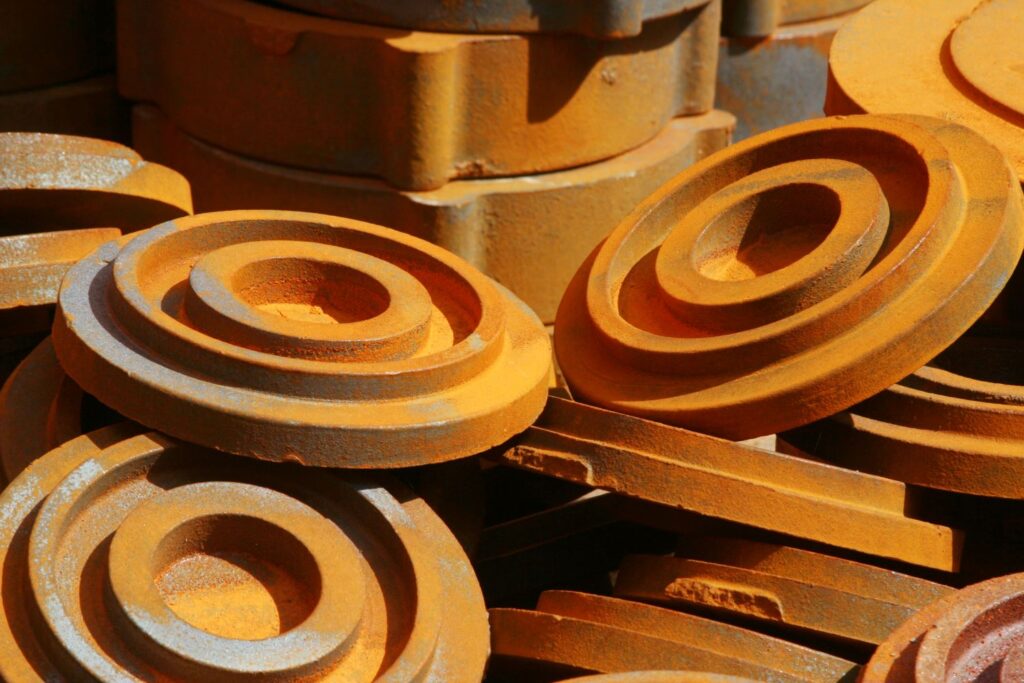
Gravity casting has quietly powered a lot of Vietnam’s mid-volume metal production for automotive, industrial, and consumer goods. In this text we explain what gravity casting is, why Vietnam is a competitive location for it, and how materials, equipment, and quality systems come together to produce reliable parts. Whether you’re evaluating suppliers or just learning the process, we’ll walk through the technical and commercial factors you need to know.
What Is Gravity Casting And How It Works
Gravity casting is one of the simplest and most robust metalcasting methods: molten metal is poured into a mould and allowed to fill the cavity under the force of gravity, rather than by pressure or vacuum. The process relies on careful gating and riser design so molten metal flows smoothly, minimizes turbulence, and allows controlled solidification.
How it works in practice:
- Mold preparation: We use expendable molds (sand, shell) or reusable molds (die or permanent mold) depending on volume and alloy. Moulds are designed with feeders and vents to control shrinkage and gas escape.
- Pouring: Molten metal, already analyzed for composition and temperature, is poured from a ladle into the sprue. The metal follows the designed flow path into the cavity.
- Solidification and cooling: Gravity casting depends on directional solidification. Risers supply feed metal to compensate for shrinkage as the casting cools. The cooling rate, influenced by mold material and section thickness, affects microstructure and mechanical properties.
- Shakeout and finishing: Once solidified, castings are removed, cleaned, and undergo heat treatment, machining, or surface finishing as required.
Advantages of gravity casting:
- Lower tooling costs than high-pressure die casting, especially for small-to-medium production runs.
- Simpler equipment and lower capital expenditures: easier to set up in varied facility types.
- Good for thicker sections and alloys sensitive to fast solidification.
Limitations and trade-offs:
- Dimensional tolerances are generally looser than high-pressure processes: more machining is often required.
- Porosity can be higher if gating and venting aren’t optimized.
- Cycle times are longer than pressure-assisted methods, so it’s less competitive for very high volumes.
When we talk about “gravity casting Vietnam,” we’re typically describing production that balances cost-efficiency, material flexibility, and local engineering know-how, traits that make Vietnam attractive for many OEMs and tier suppliers.
Materials, Alloys, And Typical Parts Produced In Vietnam
Vietnamese gravity-casting operations commonly work with a few alloy families depending on industry needs:
- Aluminum alloys: 3xx and 5xx series (e.g., A356, A357) are widely used for automotive housings, gearbox casings, heat sinks, and consumer appliance components. Aluminum’s low density and good corrosion resistance make it a top choice.
- Cast iron: Gray and ductile iron are used for pump bodies, engine parts, and heavier industrial components that require wear resistance and damping.
- Zinc alloys: For decorative hardware, small housings, and fittings where fine detail is needed and mechanical load is moderate.
- Copper and copper alloys: Less common but used for electrical connectors and specialty components where conductivity or corrosion resistance is critical.
Typical parts we see produced by gravity casting in Vietnam include:
- Automotive brackets, housings, and transmission components, often low-to-mid-volume runs for tier suppliers.
- Industrial pump housings, valve bodies, and gearbox enclosures for local and export markets.
- Consumer appliance bodies, motor housings, and structural castings for electronics and home goods.
- Agricultural and construction equipment parts where robustness is prioritized over tight tolerances.
Why these materials work well in Vietnam:
- Local foundries have matured expertise with aluminum sand and permanent-mold processes and maintain supply chains for scrap and primary metal.
- Labor and energy costs are competitive compared to many Asian alternatives, allowing foundries to economically produce parts that require some manual finishing or inspection.
- Proximity to regional automotive and appliance assembly plants creates demand and shorter logistics chains for mid-volume production.
Manufacturing Process, Equipment, And Facility Requirements
Gravity casting facilities in Vietnam range from small craft foundries to modern plants with automated handling. The core process equipment and facility requirements include:
- Furnaces: Induction and gas-fired reverberatory furnaces are typical. Induction furnaces provide tighter temperature control and cleaner melts for higher-quality aluminum and copper alloys.
- Molding equipment: Sand ramming stations, shell mold setups, and permanent-mold machines (tilt or horizontal) are common. For permanent molds we see gravity die setups that allow controlled pouring and faster cycle times than sand molds.
- Pouring and handling: Ladles, pouring spouts, and sometimes semi-automated crane or robotic pourers. For higher volumes, automated pouring cells reduce human variability and improve safety.
- Heat treatment and machining: Quenching and tempering ovens, aging ovens for aluminum, and CNC machining centers for finishing critical dimensions.
- Testing and inspection: Metallography, spectrometers, X-ray/CT for internal defects, and coordinate measuring machines (CMM) for dimensional checks.
Facility considerations:
- Environmental controls: Foundries must manage dust, fume extraction, and wastewater. Vietnam has tightened environmental enforcement in recent years, compliance equipment is often required for export-oriented operations.
- Safety and ergonomics: Proper lifting equipment, protective systems, and operator training reduce incidents and improve consistency.
- Space for secondary operations: Many gravity-casting suppliers in Vietnam integrate machining and assembly: make sure there’s room and workflow design for post-cast processing.
Process controls that matter:
- Melt chemistry control with spectrometers and consistent charge mixes.
- Pouring temperature control and thermal profiling of molds to ensure repeatable solidification.
- Standardized gating and riser designs validated by simulation (we encourage using moldflow/solidification software where part cost justifies it).
When evaluating a supplier, we prioritize facilities that combine sound metallurgy, proper environmental controls, and integrated post-cast capabilities.
Quality Control, Standards, And Common Defects
Quality assurance in gravity casting centers on metallurgical integrity and dimensional control. Key standards and QC practices include:
- Relevant standards: ISO 9001 for quality management and IATF 16949 for automotive suppliers are common. We also look for ASTM, EN, or JIS specifications for specific alloy chemistry and mechanical properties.
- Incoming material control: Certificates of analysis for raw materials and scrap, and routine spectrometer checks on melt batches.
- Process documentation: Pour records, thermal profiles, and inspection logs to ensure traceability.
Typical inspections and tests:
- Visual and dimensional checks: For surface defects and form accuracy.
- Non-destructive testing (NDT): X-ray or CT scans for internal porosity, ultrasonic testing for thicker iron castings.
- Mechanical testing: Tensile, hardness, and impact tests per the relevant specification.
- Microstructural analysis: To verify grain structure, phase distribution, and detect inclusions.
Common defects in gravity casting and mitigation:
- Porosity and gas entrapment: Caused by turbulence, improper venting, or hydrogen in the melt. Mitigation includes improved gating, degassing, and controlled pouring techniques.
- Cold shuts and misruns: Result from low pouring temperature or slow flow: solved by increasing pour temp or redesigning gates to ensure continuity.
- Shrinkage cavities: Poor riser placement or insufficient feed metal. Proper riser sizing and directional solidification prevent shrinkage defects.
- Inclusions and slag: From dirty charge materials or poor fluxing: maintain clean melting practices and skimming.
We always recommend suppliers provide sample inspection plans and first-article reports. For critical parts, insist on NDT and a production trial run with documented results before approving a full production release.
Market Landscape, Costs, And How To Choose A Supplier In Vietnam
The market for gravity casting in Vietnam has matured: a mix of domestic foundries, foreign-invested enterprises, and contract manufacturers serve local OEMs and export markets. Key commercial considerations when sourcing here:
- Cost structure: Labour and some utility costs are lower than in neighboring developed markets, but energy and compliance costs vary regionally. Tooling for gravity casting is cheaper than high-pressure alternatives, making Vietnam attractive for runs where tooling amortization is a concern.
- Lead times and capacity: Many Vietnamese suppliers can deliver prototypes in weeks and scale to mid-volume production quickly. For very high volumes, compare per-unit costs against alternatives in China or Southeast Asia.
- Export readiness: Suppliers experienced with automotive or appliance exports usually have stronger QA systems, traceability, and packaging processes.
How we recommend choosing a supplier:
- Technical fit: Confirm the supplier has experience with the specific alloy and part complexity. Ask for similar part examples and metallurgy reports.
- Quality systems: Verify certifications (ISO/IATF) and inspect their NDT and testing capabilities. Request first-article inspection and sample reports.
- Facility audit: If possible, perform an audit focused on melt control, environmental compliance, safety, and post-processing capacity.
- Total cost of ownership: Compare unit price, scrap rates, rework, transport, tariffs, and lead-time impact, not just the quoted per-piece price.
- Communication and engineering support: Strong suppliers provide mold-flow simulation, design-for-casting feedback, and rapid iteration during prototyping.
We also recommend starting with a pilot order to validate quality and logistics. A short validation run reveals real-world defect rates, communication responsiveness, and packing/handling quality, elements that aren’t obvious from specs alone.
Conclusion
Gravity casting Vietnam offers a pragmatic combination of cost, flexibility, and material options for mid-volume parts where tight die casting tolerances aren’t required. By focusing on melt control, proper gating/riser design, and verified supplier quality systems, we can mitigate common defects and achieve reliable parts for automotive, industrial, and consumer markets.
When evaluating suppliers, we stress technical competence and traceability over lowest price. If you’re considering sourcing gravity-cast parts from Vietnam, start with a well-documented prototype phase, require NDT for critical features, and factor total cost of ownership into your decision. With that approach, Vietnam is a compelling option for many gravity-casting programs.
Related Posts

Find Affordable Ratchada Apartments Without Compromise
Finding Your Perfect Ratchada Apartment Without Breaking the Bank Looking…
Automotive Testing for Material, Component, and Production Quality
Vehicle components must perform consistently under heat, vibration, moisture, chemicals,…

Reduce Costs, Increase Profits with Factory Rental in Lat Krabang
1. Choosing a Factory for Rent in Lat Krabang: A…